
 Every effort goes with mistakes
as fire goes with smoke.
Therefore one should not give up
the work that corresponds with ones nature
because it is full of defects.
Bhagavad-gita 18:48
The Great Work or Magnum Opus in Latin, is an alchemical name for the process which leads to the creation of the philosopher’s stone. It has been used to describe personal and spiritual transmutation attached to laboratory processes and chemical color changes, used as a model for the individuation process in psychology, and as a device in art and literature. It makes a ready model for the hard work of examining the self and improving it, which was my intention in exploring alchemy.
The alchemists often repeat that the entire work is only one process, requiring only one simple action. This action is named with different terms depending on the point of view one takes. It is called purification, washing, cleaning, warming, cooking, distilling and so on. Some alchemists put all those terms in a seemingly chronological order.
Symbols of the Magnum Opus
 The magnum opus had a variety of symbols ad colors attached to it. The above symbol is the illustration of squaring the circle, used in the 17th century to represent the great work. Birds like the raven, swan, and phoenix could be used to represent the progression through the colors. The four basic stages were paired with a color; nigredo with black, albedo with white, citrinitas with yellow, rubedo with red. The symbolic language was meant to convey information, but to receive and understand this information it requires a different mindset than most people have in our modern society. It is not meant to be a quick process, for one thing, but it also requires a level of personal honestly, self examination and discipline that people often find difficult today.
Even in the beginning, in the Great Work was considered to be performed on the alchemist as well as the the materials he worked with. The Philosopher’s Stone is seen as the manifestation of universal spirit, present in all creation, and thus also in the alchemist himself.
“Almost everybody who has heard about the philosopher’s stone and its power, asks where it can be found. The philosopher always answers twofold. First, they say that Adam has taken the philosopher’s stone with him from Paradise, and that it is now present within you, within me, and within everybody, and that the birds of far countries has taken it with them. Second, the philosophers answer that it can be found in the earth, in the mountains, in the air and in the river. Now what way should one seek? To me, both ways; but each way has its own way.” (Michael Maier, 1617).
The necessity of having the alchemist properly prepared before engaging in the work is one reason for the symbolism and allegory. Mystery is important in alchemy. It serves a double function. Of course it protects the powerful knowledge from misuse by the uninitiated and unethical. But perhaps more importantly, it promotes a state of mind conducive to creative thinking, excites the senses to greater sensitivity and awakens the soul to nature.
In the words of Albert Einstein “The most beautiful thing we can experience is the mysterious. It is the art of all true art and science. He to whom this emotion is a stranger, who can no longer pause to wonder and stand rapt in awe, is as good as dead: his eyes are closed.”
To preserve the mystery and all it represents requires a strength of character that must be developed before all things for the alchemist. But before one can build the strength of character to keep the secret of the Philosopher’s Stone one must be of sound body and mind. There are real reasons that alchemy developed a deep relationship with both physical and mental healing.
So how does a person begin the work?
In many of the same ways people ordinarily begin to work on improving themselves. Firstly making a determination to do so. Then making an honest and careful assessment of the state of one’s body and mind. In undertaking the great work you will need focus, determination, physical energy and mental stamina. You will need discretion, honesty and openmindedness. You cannot be impatient and you cannot avoid the unpleasant when it raises its ugly head. But these things are far from unachievable and they are indeed part of the Great Work. To explore the higher levels of yourself and the universe you just need to climb slowly and carefully and take the lessons of the lower levels into your nature. Many have taken this path before and found the rewards well worth the effort.


 After the fall of the Roman Empire, alchemical development moved to the Islamic World. The roots of Muslim alchemy came from the Greek. Arab scholars saved and preserved the Hellenistic works that were otherwise lost. They translated them, created commentaries on Greek authors and incorporated many of their theories and technical terms into Arabic alchemy works. This extensive writing is why much more is known about Islamic alchemy because it was better documented. This knowledge came partly through direct contact in Egypt, partly through the medium of Syrian Christian translators, and partly by way of Persia. Persian influence is evident through linguistic clues in technical terms and in names of minerals. Noticeably, many of the principal Muslim alchemists were Persians. The word alchemy itself was derived from the Arabic word al-kīmiyā’ (الكيمياء).


 “I want to quit.”
 The second bucket is the financial bucket. Those who want to get out of debt and save money are to be commended. For many though, this may be almost as difficult as bucket number one. In fact, if the reason you are in debt is chronic over-spending or spending binges you may be more properly assigned with the smokers and drinkers. If you are spending as a substitute for some unmet emotional need or as a compulsive behavior you need the same help and support as they do. As an accountant for decades, I often had to look closely for the true reasons my clients were having money problems and this is more common than most people realize.



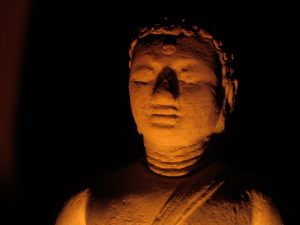
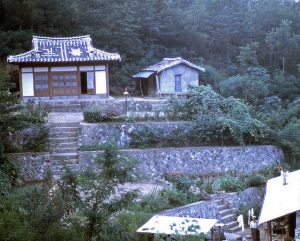 My true introduction to meditation took place in Korea. It happened over 40 years ago. It was a very hot spring day and their was a banging on the metal gate of the house compound. The house girl came in to tell me there was a Buddhist monk begging at the gate for rice. I knew many monks were required to make the rounds to obtain supplies for their temples. The house girl was sent her to get some rice while I went to the household cash. I took up a handful of coins, then stepped outside. The amazement on the monk’s face when he saw me is still a clear memory.
5. Break things down into segments and track your progress If you set smaller goals in steps you’ll be much less likely to chuck it all in if you get off track or backslide. If you goal was loosing weight and Mom keeps plying you with food on a family visit, knowing that up until then you were succeeding makes it much easier to get back to your routine once you’re home. A regular stream of small successes works better to keep you motivated and the routine of tracking it all helps keep you focused. If crisis strikes and you light up, knowing you went three months without smoking could be a big help in realizing you can start over and do it for longer next time.
6. Don’t crucify yourself if you get off track Life happens. Dealing with a family crisis, a layoff notice, an unexpected and expensive car repair could all take priority over your resolution plans. None of us is perfect and expecting perfection is unrealistic. Things happen we often have no control over. What we can control is how we choose to react to what happens. So show yourself a little tolerance and forgiveness, get back on track, and instead of replaying the past until you are totally discouraged, remind yourself you still have power over the future. I am guilty of this myself, coming from a background where perfection was expected of me, so I know how sabotaging it can be.
7. Give yourself enough time Experts say it takes about a month to form a new habit and a good six months for it to become part of your personality. In today’s world you are bombarded constantly with the idea of instant gratification. Don’t let this sabotage you. A two week regime will not change anything. Quitting smoking is a good example. Cravings might go on for months. The optimal rate of weight lost that allows your body to reset and adjust is about two pounds a week, so even ten pounds will take a month. Loosing some weight is one of my goals this year and I know if I push for fast results it just won’t work with my metabolism.
8. Build you willpower Believe it or not, willpower is not something you are born with. Willpower can be developed just like memory or muscles. A series of small challenges can build your willpower. One technique successfully used in experiments was to briefly squeeze a grip strengthener twice a day. A practice of turning down sweets for a healthy snack or passing on second helpings has also worked to build willpower and helped achieve even unrelated goals.
There is plenty of scientific evidence to back this up so if your excuse is “I have no willpower.” maybe you should start with the step of building some. Please bear in mind lack of willpower is not the reason you fail if you have a major addiction or a deep-seated problem for which you need professional help. See below that help is required for even small things, don’t think it’s all willpower alone.
9. Enlist support Try to get your family on board. If you want to lose weight, get fit, eat healthier or stop drinking or smoking, your family will be affected and it’s better to have them helping than resisting the change. Find a group or program that will support you. Local hospitals often sponsor smoking cessation and classes for wellness. There is professional help available also and if you need it you should take advantage of it. Psychologists, pastors, and life coaches all have skills to help make life changes. A professional hypnotist can help with weight loss, smoking cessation and stress management. Twelve step programs are there for people with addictions. Even for things like taking a daily walk, having a partner is a big help. Any dog owner will tell you their canine partner helps keep them fit.
10. Share your experience Remember, all those surveys and articles show how many are in the same boat. Meetup.com has groups for almost every interest or activity. Ask people you meet at the gym what they do that works for your issue. Find a partner to work out with. Talk about your experience with a sympathetic friend or relative, saying things out loud tends to reinforce them in our minds. Misery loves company is a very old expression.