Alchemy was not restricted to one culture or group. So among the many traditions it should be possible to find one that resonates for your personal alchemy. Any technique or practice the is going to be effective for personal change must be one you can feel comfortable with from he start.
For hundreds of years alchemists toiled in their laboratories to produce a mythical substance known as the philosopher’s stone. The supposedly dense, waxy, red material was said to enable the process that has become synonymous with alchemy—chrysopoeia, the metamorphosis, or transmutation, of base metals such as lead into gold. We now know that their efforts at the physical level were in vain but on the spiritual, philosophical and psychological levels, hey have left a rich legacy for us to explore.
Hellenist Egypt
The start of western alchemy is generally be traced to Hellenistic Egypt. The city of Alexandria was a center of knowledge through most of the Greek and Roman periods. Here, elements of technology, religion, mythology, and Hellenistic philosophy, combined to form the earliest traditions. Zosimos of Panopolis was an Egyptian alchemist and Gnostic mystic. He lived around the the end of the 3rd and beginning of the 4th century AD. He wrote the oldest known books on alchemy, which he called “Cheirokmeta,” using the Greek word for “things made by hand.” Pieces of this work survive in the original Greek and Syriac and Arabic translations.
India
The use of the element mercury for alchemy is first documented in the 3rd– or 4th–century Arthashastra, an encyclopedic volume on political economy, social issues and other subjects. Buddhist texts from the 2nd to 5th centuries mention the transmutation of base metals to gold.
The 11th-century Persian chemist and physician Abū Rayḥān Al-Bīrūnī, visited the province of Gujarat and wrote
“They have a science similar to alchemy which is quite peculiar to them, which in Sanskrit is called Rasayāna and in Persian Rasavātam. It means the art of obtaining/manipulating Rasa: nectar, mercury, and juice. This art was restricted to certain operations, metals, drugs, compounds, and medicines, many of which have mercury as their core element. Its principles restored the health of those who were ill beyond hope and gave back youth to fading old age.”
So there was a health and medicine component in Indian alchemy. Additional goals of alchemy in India included the creation of a divine body (Sanskrit divya-deham) and immortality while still embodied (Sanskrit jīvan-mukti).
Muslim world
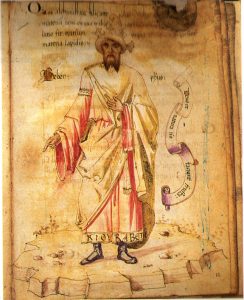 After the fall of the Roman Empire, alchemical development moved to the Islamic World. The roots of Muslim alchemy came from the Greek. Arab scholars saved and preserved the Hellenistic works that were otherwise lost. They translated them, created commentaries on Greek authors and incorporated many of their theories and technical terms into Arabic alchemy works. This extensive writing is why much more is known about Islamic alchemy because it was better documented. This knowledge came partly through direct contact in Egypt, partly through the medium of Syrian Christian translators, and partly by way of Persia. Persian influence is evident through linguistic clues in technical terms and in names of minerals. Noticeably, many of the principal Muslim alchemists were Persians. The word alchemy itself was derived from the Arabic word al-kīmiyā’ (الكيمياء).
China
Both the Eastern practice of alchemy and the later Western practice are remarkably similar in their methods and ultimate purpose. Practitioners of both traditions pursued the elixir of immortality as well as the secret of transmuting one element into another. Turning base metals into gold or silver, was explored by both for obvious reasons.
But because the Chinese approach came from a basis in the doctrine of Yin and Yang, Five Phases theory and the I Ching, Chinese alchemy was often more concerned with more philosophical concerns. It also meant Chinese alchemy was more consistent in its practice from the beginning. There was relatively little controversy among its practitioners. In Europe there were conflicts between alchemists who favored gold-making and those who thought medicine the proper goal. Chinese alchemy was more focused on the medical aspect.
You can see from these examples the common threads that connect the practice of alchemy throughout the world. And from it’s roots in medicine and philosophy, we can derive a practice adapted for our current needs and beliefs. What remains of alchemy after the gold making efforts have died are rich traditions that can still be mined to help personal transformation.
Hey there. Thanks for this wonderful piece!